
Have you ever found yourself on a beach, holding binoculars and getting excited about all the coastal birds around you? No? Then you’ve either not turned 30 yet, or you haven’t experienced the amazing richness of birds before! Let me introduce you to the incredible bird biodiversity found on- and offshore in False Bay and in the Simon’s Town area.
The Cape Peninsula hosts many special species found nowhere else, which makes spotting them even more of a treat. We call these species endemics, meaning they occur in only one location and do not exist outside it. Because they occupy such a small area, they face threats more easily. The International Union for Conservation of Nature (IUCN) even lists some of them as endangered on its Red List of threatened species. This means that they are at risk of extinction if we do not change our interaction with nature.
Let’s have a look at which species can be found around the False Bay area!
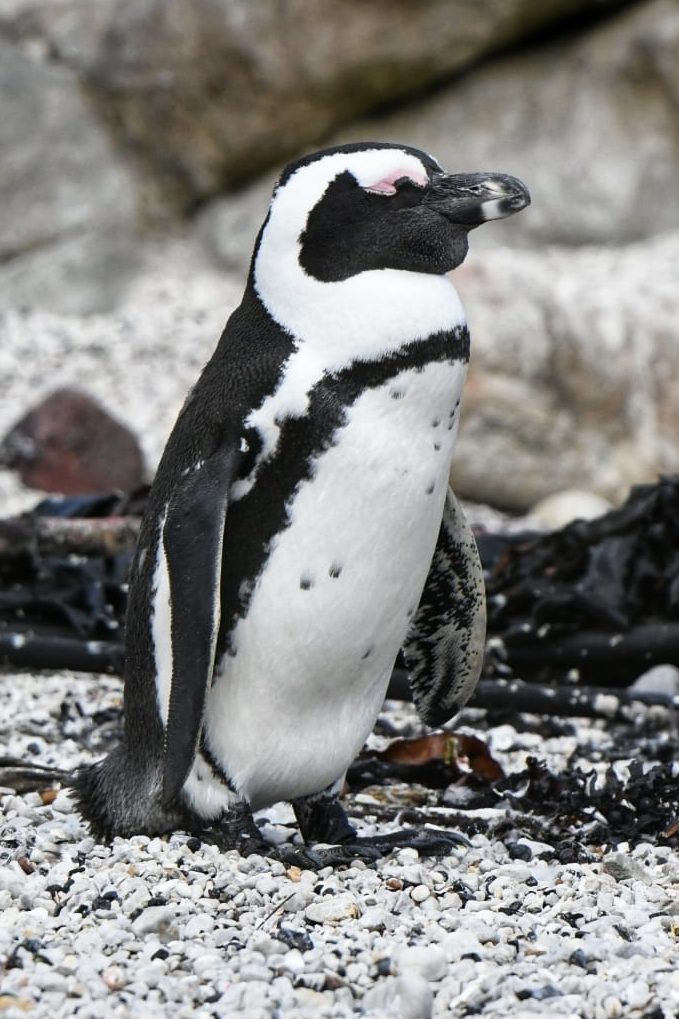
African Penguin
The local Simon’s Town celebrities, the African penguin! They are one of the most recognisable species of bird in the world, and these penguins are critically endangered. They only have a few breeding colonies left in the False Bay area, of which the one at Boulder’s Beach is the most well-known. The penguins are most threatened by commercial overfishing, and coastal land development. They originally bred on the rocky islands in False Bay, but are displaced by the Cape Fur Seals claiming these rocks. The Cape Fur Seals were driven off their original breeding grounds by us humans wanting to develop houses with nice sea-views. Nowadays, penguins establish their nests on the beaches, and they are immediately a protected area and fenced off to not disturb the penguins.
Locations to spot them – Boulder’s Beach in Simon’s Town, or Stony Point reserve in Betty’s Bay
IUCN Red List status – Critically endangered
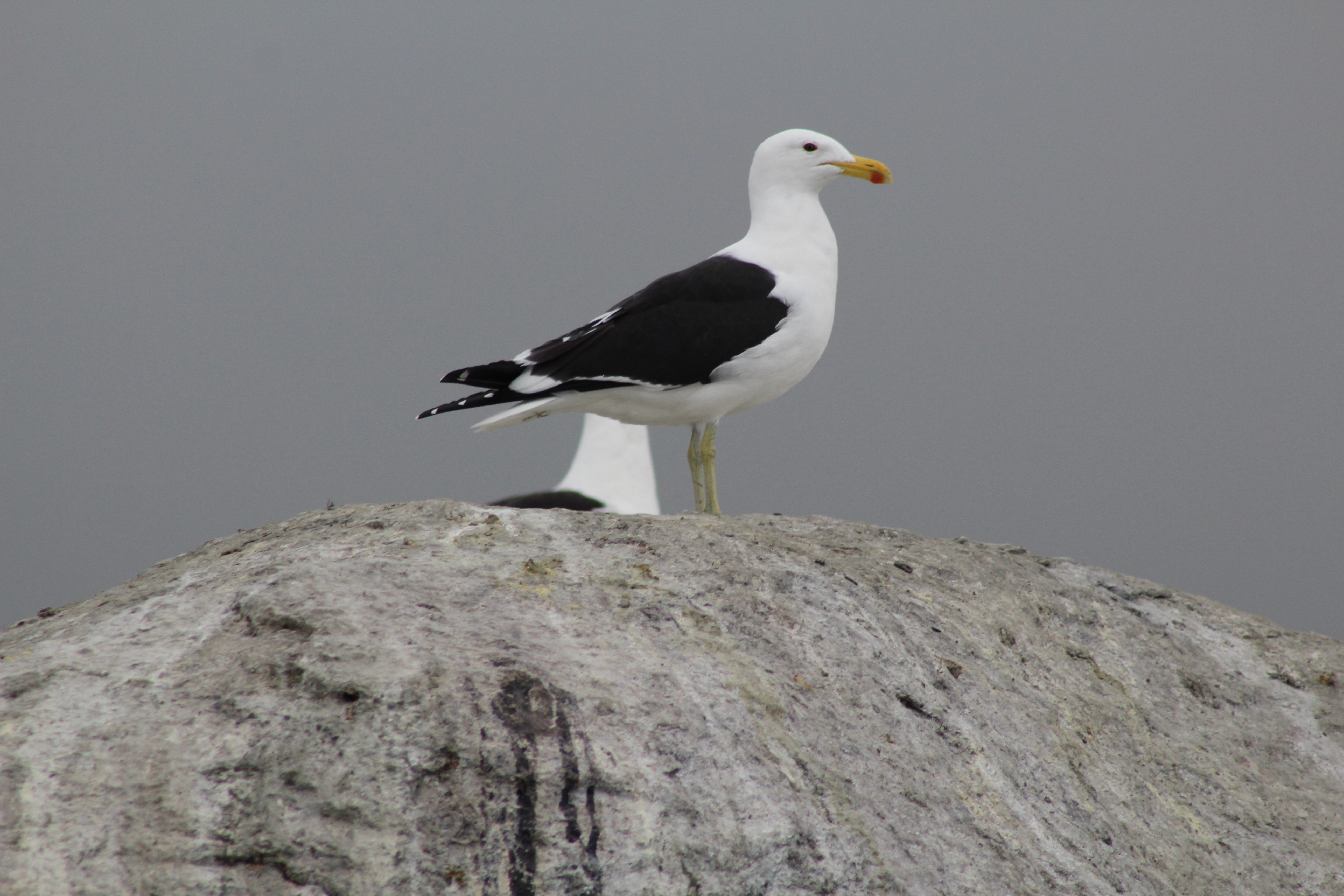
Kelp Gull & Hartlaub’s Gull
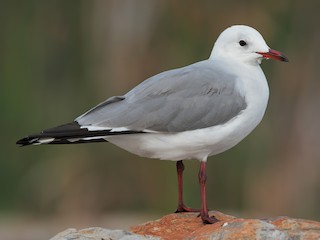
Probably everyone has seen these before! The Kelp Gull is one of the most recognisable shore bird species in False Bay and Cape Town. The black wings and larger size separate it from its smaller cousin, the Hartlaub’s Gull. The Hartlaub’s is smaller and more grey, but with a white head and pinkish legs. About 99% of the gulls that you’ll see in False Bay are either one of those species, and there are a few more rare species for the avid birders to spot. My tip is to look for those in the larger groups, as they are often hiding in there!
Locations to spot them – literally everywhere along the coast or near beaches.
IUCN Red List status – Least Concern (both species)
Cormorants – White-breasted, Cape, Crowned, and Bank
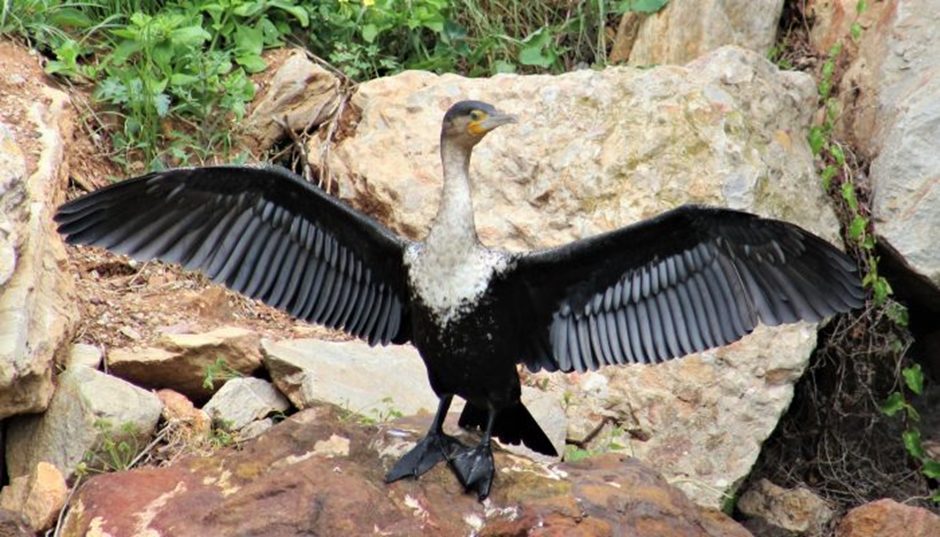
Along the coast, people call these birds “duikers” in Afrikaans because they often dive from the air into the water or dive while bobbing on the surface. The cormorants are able to do this because of a special modification to their feathers, which are not water-repellent. For a shore bird, this is unique, and it allows them to dive quicker and deeper than other birds. This way, they do not compete with the surface birds (like gulls) for food. The downside is that they will need to dry their feathers afterwards, leading to the well-known spreading cormorant pictures.
You can differentiate between the species by looking at the eye colour. A blue eye, combined with a light or white breast, is the White-breasted cormorant. The other cormorant with blue eyes is the Cape Cormorant, and that also has a red patch underneath its bill. The Crowned is identified by its crest, and it will have a red eye. The Bank Cormorant is an unlikely spot, as it’s critically endangered and difficult to differentiate. They look very similar to the Cape Cormorant, but they have a bicoloured eye, brown-orange on the top half, and blue-green on the bottom half, and they do not have the red patch underneath its bill.
Locations to spot them – Along the coast on places where they can dry their feathers, such as piers, high rocks, boats, or small islands.
IUCN Red List status – Least Concern (White-breasted & Crested cormorants), Endangered (Cape & Bank cormorants)
African Oystercatcher
If you’re planning on going to the beach during the summer months of November through January you’ll definitely hear this one! The Oystercatcher nests on the beaches, and they are very protective of their nests. As we have to share our beaches with them, we need to be mindful when recreating in their breeding grounds. If you hear the sharp kleep-kleep-kleep, that is the sound of a pair of African Oystercatchers asking you nicely to move a bit further along the beach. Their all-black plumage, bright orange beak, and orange eye-ring make them easy to identify.
Locations to spot them – On beaches or in rocky tide pools, where they like to forage for food.
IUCN Red List status – Least Concern
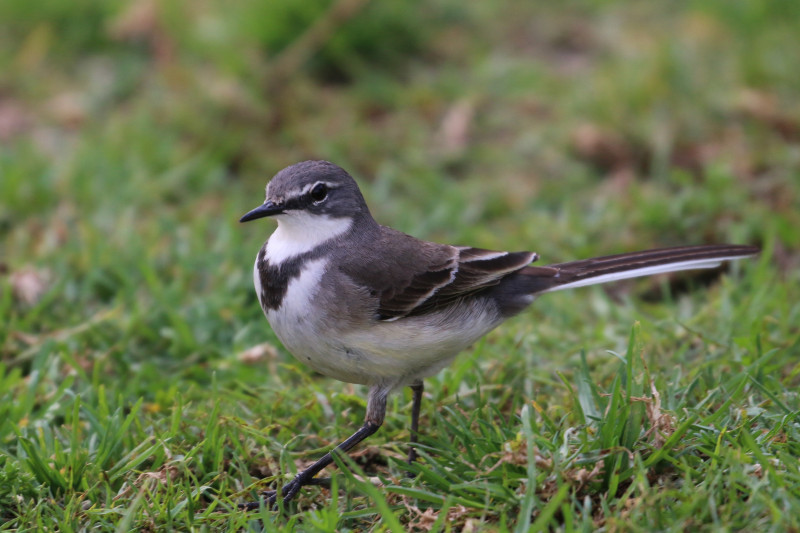
Cape Wagtail
The name of the Cape Wagtail already gives away its most identifying feature, the wagging tail. It’s a small bird with a brownish back and white underside. You probably have seen them before, scurrying on the stranded kelp on the beach or on the rocks. This is because the Cape Wagtail mostly feeds on insects, which they to pick off the rotting kelp.
Locations to spot them – Along the coast on the beaches, look for them near the kelp, or flitting around on the rocks around the beach.
IUCN Red List status – Least Concern
Cape Gannet
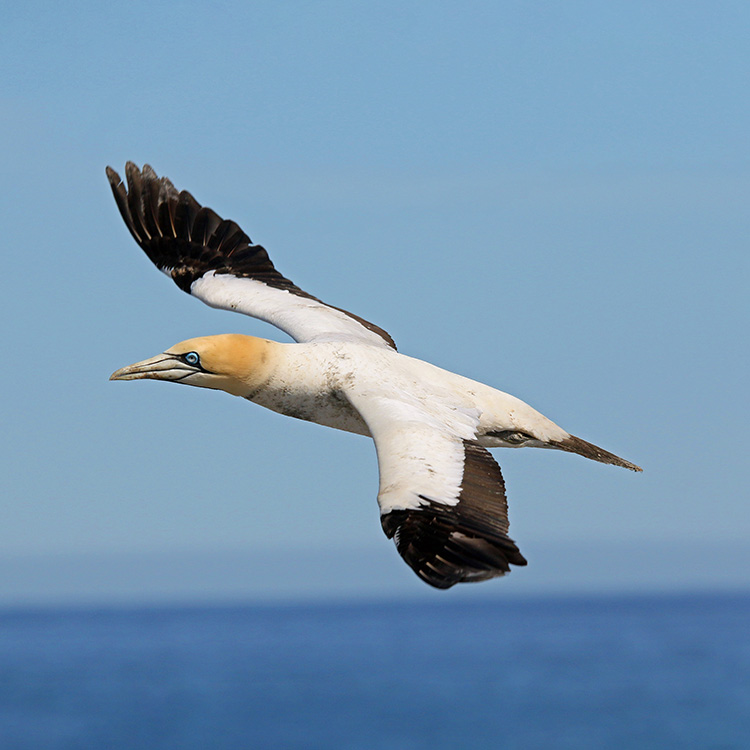
This is probably the rarest sighting of this list that you’ll come across in the False Bay area. They are pelagic seabirds, which means that they spend most of their time out in the open ocean. If you’re lucky, you can see them plunging down from 20-30m into the sea to catch fish. A quick sharp turn, beak pointed downwards, wings folded in – and snap, the fish is caught and gobbled up by the Gannet. The Gannets do come ashore, but to breed, and their population numbers have been decreasing over the past years. As a result of this, there’s only 6 known breeding colonies, all spread over the west coast of Namibia and South Africa.
The Cape Gannet’s apricot-yellow head and snow-white, streamlined body make it easy to identify.
Locations to spot them – Out on the water of False Bay, following boats, or on the breeding colonies in the north part of the Western Cape.
IUCN Red List status – Endangered
Brown Skua
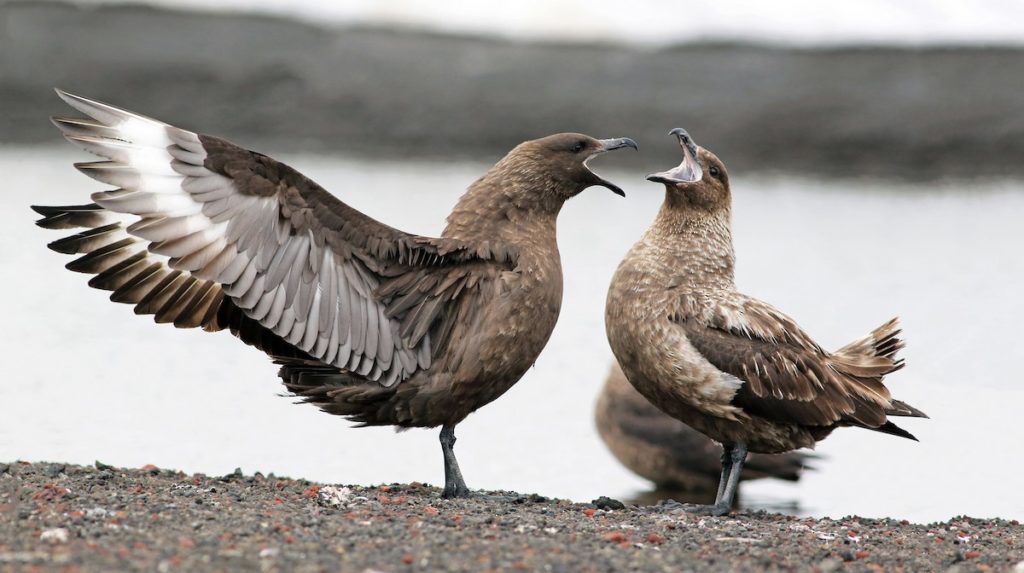
These brown seabirds are probably best described as “the pirates of the ocean”! They love to hang out near other groups of seabirds, to try and steal their catch as soon as they get it out of the water. It’s less energy spent for them, and a free meal to boot! Sometimes they’ll even steal a penguin chick right out of the nest if the Skua is particularly hungry. They look a bit like a large brown seagull, with white flashes on their wings near the tips. The Skuas are not particularly afraid of humans and will sometimes dive bomb if you get to close to their breeding grounds.
Locations to spot them – Seal Island in the middle of False Bay, or in the Antarctic region if you’re willing to travel a bit further.
IUCN Red List status – Least Concern
Helping out with Citizen Science
As we’ve seen, endemic coastal birds become endangered very easily because they occur in such a small area. That’s why Citizen Science, where regular citizens like you and me contribute to population research, is so important. There are multiple options to contribute to this, such as recording your counts and sightings on apps like eBird or Merlin, which helps the Cornell Institute of Birds with their worldwide population counts.
A good way to help with Citizen Science on the projects that Cape Radd is working on, you can always join the Scuba, Snorkel, or Kayak for Science initiatives which will take you out to shore and in the water, where you can get up close with these amazing birds. Another option available is to join one of Cape Radd’s Ocean Safaris, where you will go out to sea to spot these coastal birds and all kinds of other ocean wildlife!